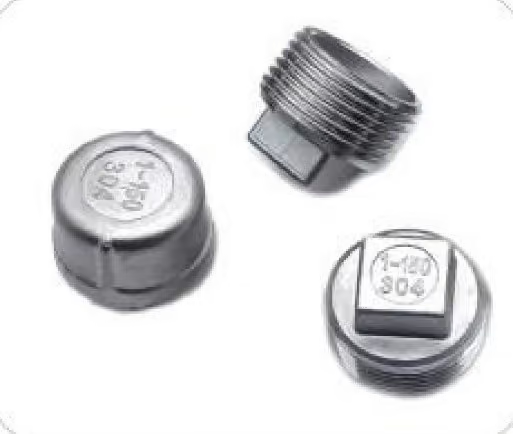
Pipe dope or Teflon tape on a compression fitting is an argument that never dies because both sides are half right. The answer is positional: on the compression joint itself — tube end, ferrule, fitting body, the tube nut’s straight threads — sealant does not belong and actively hurts; on the pipe-threaded end of the same adapter, the opposite is true, because an NPT taper expects tape or compound to close its helical leak path. Confuse them and the classic failure follows: tested tight, weeping a month later.
Key takeaways
- The compression joint seals by the ferrule biting the tube — metal to metal. Sealant on the tube, ferrule, body or nut threads prevents the bite; makers’ instructions say so verbatim.
- Grease on the sealing surfaces creates a “wet seal” that passes a short test, then migrates or slips under cycling and leaks later.
- The tube nut’s threads are not a pressure boundary — they only draw the ferrule into place. Taping them hides a bad make, nothing more.
- NPT/BSPT tapered ends need sealant on the male thread, kept off the first thread or two. BSPP parallel ends never seal on the thread — they seal at the face.
- The lubricant exception is narrow: the maker’s specified product on the maker’s named locations — never between ferrule and tube.
How a compression fitting actually seals
A double-ferrule fitting seals at two metal interfaces: the front ferrule is driven into the body seat while its leading edge bites the tube OD, and the back ferrule grips and anchors — the mechanism in single ferrule vs double ferrule fittings. The tube nut’s threads only convert wrench torque into axial drive; the thread annulus sits outside the sealed fluid volume. So makers’ instructions read nearly identically: tubing clean, dry, deburred; no sealant or tape on tube, ferrules, body or straight threads — a national-lab engineering standard says it in one line. The full discipline is in how to install stainless steel compression fittings.
Why dope on the ferrule backfires
Grease on tube or ferrule is a boundary layer between surfaces that must fuse by controlled deformation. It cuts friction exactly where friction is the tool: the ferrule skates instead of biting, deforms unevenly — gripping one side of the tube, leaking on the other — and a joint that “feels” tight has often not gripped at all. The film also wrecks torque feel, so normal wrench force drives the nut too far: crushed ferrule, collapsed tube, fitting pulled past its seat.
The second failure is slower. A grease-filled joint passes a short static test because the compound temporarily fills the scratches where a leak path starts; then vibration, cycling or thermal movement migrates the fill or shifts the ferrule, and the path opens at working pressure — the wet seal: tested fine on Friday, weeping by next month. The repair is disassembly, not another quarter-turn: new ferrule, residue-free degrease, remake to spec, retest at service pressure. In-service diagnosis is in compression fitting leaks: causes and fixes.
Where sealant IS right: the pipe thread end
The threaded end follows different physics. NPT is tapered: flanks wedge together as the joint tightens, but crests and roots never mate perfectly, leaving a helical leak path along the thread. Tape or compound fills that path and lubricates against galling — coat the male thread, keep it off the first thread or two so strands cannot enter the system. BSPT is the same story: a taper sealing on the flanks with approved compound.
BSPP is the opposite machine. The G thread is parallel and only clamps the parts together; the seal happens elsewhere — under a bonded washer, in an O-ring groove, on a machined seat. ISO 228-1 itself defines pressure-tightness as coming from a seal other than the threads, so tape on a parallel flank seals nothing: the gap at the face leaks straight past it.
| End on the drawing | Thread form | Seals at | Sealant? |
|---|---|---|---|
| Compression tube end | Straight nut thread | Ferrule-to-tube metal bite | Never |
| NPT / BSPT male end | Tapered | Thread flanks plus compound | Yes — tape or dope, male thread only |
| BSPP (G) male end | Parallel | Face: washer, O-ring or bonded seal | No — sealing element at the face |
Deep dives: BSP thread seal and identifying NPT vs BSP threads.
Lubricant vs sealant: the permitted exception
One sanctioned use of grease exists, narrower than shop folklore. Some makers permit the supplied lubricant on the body threads and rear face of the back ferrule of preswaged fittings — surfaces that transmit drive, not seal. One major maker goes further both ways: its stainless procedure requires a specified anti-galling lubricant on the threads, its steel fittings none. The constants: the specified product, on the named locations, ferrule-to-tube interface clean and dry. No lubricant named in the instructions means none.
RFQ lines
end forms— one line per end: compression tube end (OD + wall), NPT/BSPT male (sealant-ready), BSPP (washer or O-ring boss, sealing element supplied).medium— gas or liquid, working pressure and temperature; gas forgives nothing at the ferrule.sealant policy— plants that ban tape strands (oxygen, analyzer, paint lines) should say so; we assemble to it.remake expectations— a remade joint deserves a retest at service pressure.- One line list, one quote: our compression fittings range quotes ends as separate lines.
FAQ
Should I use Teflon tape on compression fittings?
No. The joint seals by the ferrule biting the tube wall — a metal-to-metal deformation seal — and the instructions are explicit: no sealant or tape on tube, ferrules, body or straight threads. Tape prevents the bite and creates a wet seal that leaks later. Only tapered pipe-thread ends, if any, want sealant.
What about thread sealant on the tube nut?
Same answer, structurally: the nut threads only draw the ferrule into position and sit outside the sealed fluid volume — they never see the medium. Tape changes how the joint feels, masking an under-make, and stray strands migrate toward the ferrule seat. Keep nut threads clean and dry.
Do the NPT threads on the adapter end need tape or dope?
Yes. Tapered NPT leaves a helical leak path; tape or compound fills it and lubricates against galling on stainless. Coat the male thread, keep it off the first thread or two. BSPT follows the same rule. If the end is BSPP, stop — that one seals at the face.
The BSPP end came with a washer — do I still add tape?
No. A parallel G thread is only a clamp; the seal happens at the mating face on the bonded washer, O-ring or machined seat that came with the fitting. Tape on the flanks seals nothing and can keep the face element from seating. Replace the washer every remake and leave the tape off.
Is any lubricant ever allowed during assembly?
Only the maker’s specified product on the maker’s named surfaces — typically the supplied lubricant on body threads and the rear of the back ferrule for preswaged fittings; one major maker requires a specified anti-galling lubricant on stainless threads. Never between ferrule and tube: there, clean and dry is the whole rule.
What torque should the threaded end actually get?
There is no universal torque number for an NPT end — the thread standard controls position, not torque: hand-tight engagement plus wrench make-up within about a turn. Makers’ guidance is turns-from-finger-tight, typically two to three turns through 3/4 inch sizes. Some makers of brass parts do publish per-size torque references for their own fittings — typically around 70% of the steel value — but those tables are maker-specific, not a thread-standard property. And wrenching past the point where the flanks wedge home only piles on interference and hoop stress: permanently deformed threads, split brass female ends. The dope or tape was only ever lubricant and filler — more force never improves the seal the taper already makes.