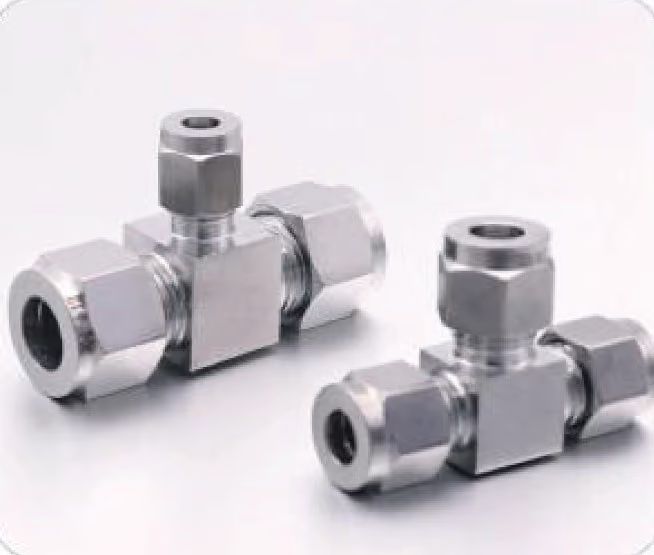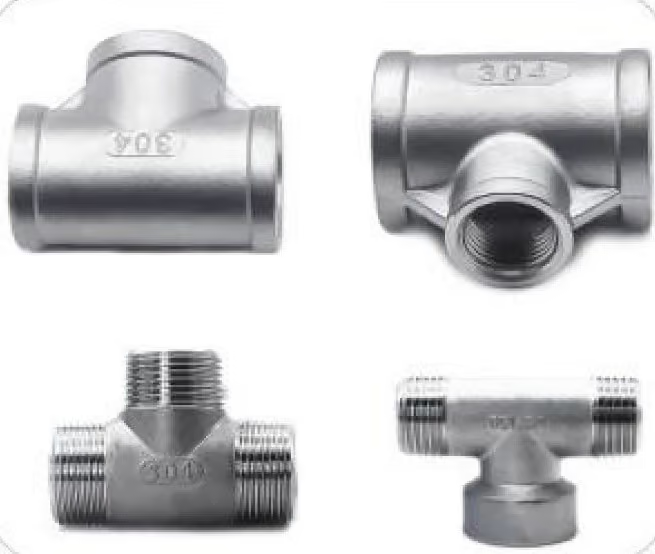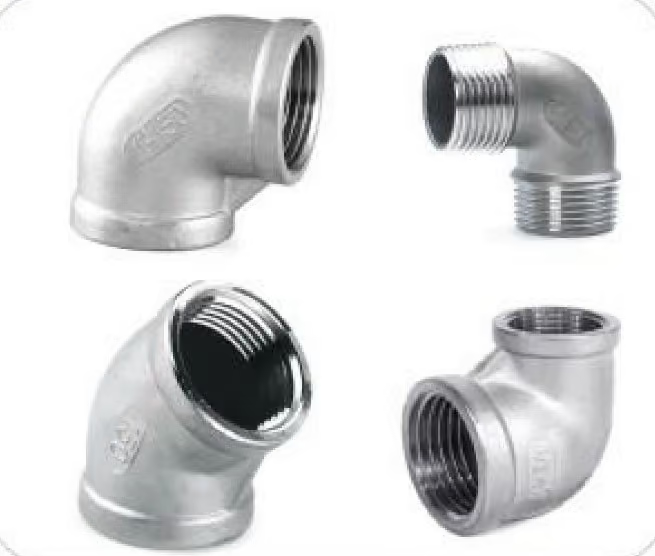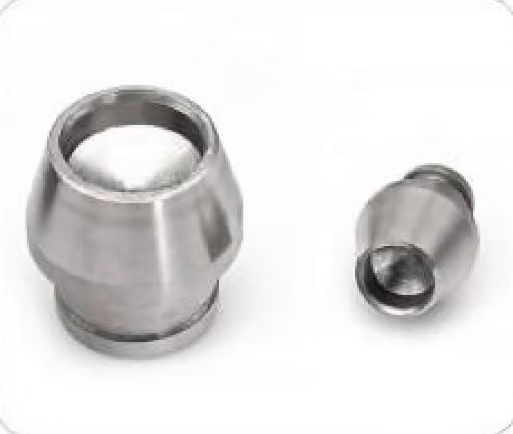
BSPP thread or BSPT thread — the two share a 55° Whitworth flank profile, often share the letter “BSP” on a sketch, and seal in completely different ways. One is a face-sealing system that happens to have a thread; the other is a thread-sealing system that happens to taper. Choose the sealing method to match the thread form and the joint holds. Choose wrong — tape on a parallel thread, a washer on a taper — and you have built a leak that no amount of torque will close.
Key takeaways
- BSPP (G, ISO 228-1) is parallel: the thread only holds the parts together; the seal happens at the face on a washer, O-ring, bonded seal or machined seat. ISO 228-1 itself defines pressure-tightness as coming from a seal “other than on the threads.”
- BSPT (R, ISO 7-1) tapers 1:16 on diameter and seals on the flanks — by thread interference plus sealant. No washer exists in the joint.
- PTFE tape cannot seal BSPP: it sits on flanks that are not the sealing surface. The gap at the face leaks straight past it.
- The classic bonded-seal dimensions are a published series — match the seal to the standard series, not just the thread name, and treat bonded seals as single-use.
- Stainless threads gall: lubricate, control torque, and replace the seal every re-make.
BSPP parallel: seals on the face
A G-thread joint is two jobs bolted into one. The parallel thread clamps the parts together and resists the load; the seal is made somewhere else entirely — under a bonded washer at the face, in an O-ring groove, or on a machined metal seat. DIN 3852 stud-end forms name the variants precisely: Form A closes with a sealing washer under the collar — plain or bonded — while Form B closes metal-to-metal on a cutting face machined into the port. Both are face seals; the thread is only the clamp. Our printable BSPP thread chart carries the sizes and TPI, and states the same rule: parallel threads seal on the face, never on the flank. The bench identification that gets you here is in how to identify NPT vs BSP threads.
BSPT tapered: seals on the thread
An R thread is the opposite machine. The 1:16 taper on diameter wedges male and female flanks together as the joint tightens, and the flank contact — with PTFE tape or paste as the gap filler — is the seal. There is no face element to seat a washer on, and the thread is not merely a clamp: it is the pressure boundary. Assembly guidance for tapered threads is consistent: always use a thread sealant on BSPT, and torque to a controlled value rather than “tight plus a grunt.”
That tape-or-paste rule is positional, and it flips completely at the other end of the same adapter: a fitting with a BSPT tail and a compression tube end needs sealant on the tapered thread and none at all on the ferrule side, where dope or tape stops the ferrule from biting — the classic signature of a joint that tested tight and wept a month later. The material-by-location rules are laid out in pipe dope vs Teflon tape on compression fittings.
The washer table
Bonded seals — the metal-rubber washers sold under the classic Dowty heritage — are sized to the BSPP thread, and the classic series is published identically by independent seal suppliers. Dimensions below are the Dowty-type series; note that metric and continental series differ in outside diameter for the same thread, so match the seal series to the drawing rather than improvising.
| BSPP thread | Seal ID (mm) | Seal OD (mm) | Thickness (mm) |
|---|---|---|---|
| G1/8 | 10.37 | 15.88 | 2.0 |
| G1/4 | 13.74 | 20.57 | 2.0 |
| G3/8 | 17.28 | 23.80 | 2.0 |
| G1/2 | 21.54 | 28.58 | 2.5 |
| G3/4 | 27.05 | 34.93 | 2.5 |
| G1 | 33.89 | 42.80 | 3.2 |
| G1-1/4 | 42.93 | 52.38 | 3.2 |
| G1-1/2 | 48.44 | 58.60 | 3.2 |
| G2 | 60.58 | 73.03 | 3.2 |
The thread dimensions themselves — TPI and major OD — are in the BSPP thread chart; the G sizes there and the seal sizes here share the same ISO 228-1 size names.
Torque and galling
Stainless-on-stainless threads seize easily: the oxide film that protects the alloy shears under load and the clean metal welds microscopically — galling. The controls are boring and effective: lubricate or anti-seize the assembly, torque to the specified value instead of feel, and do not re-use a bonded seal that has taken a set — treat it as a consumable, new at every re-make. The full galling mechanics and the fastener-side fixes are in thread galling on stainless steel fittings.
RFQ lines
G1/2 male stud, DIN 3852 Form A, bonded seal supplied— thread, form and seal in one line.R1/2 male, thread sealant per assembly spec— for the tapered side.316, with anti-seize assembly— material and assembly note together.- Seal series when it matters:
Dowty-type bonded seal, G1/2versus the continental series.
FAQ
Can I use PTFE tape on BSPP threads? No. A parallel thread’s flanks are not the sealing surface — the joint seals at the face. Tape on the flanks cannot bridge the face gap, and fitting guidance is explicit that PTFE tape will not produce a pressure-tight BSPP joint. Use a bonded seal, O-ring or the machined seat the port was designed for.
Why does BSPT not need a washer? Because the seal is the thread itself. The 1:16 taper wedges the flanks into metal-to-metal contact as the joint tightens, and sealant fills the microscopic spiral path. There is no face element and no cavity for a washer; adding one would change nothing because the thread, not the face, carries the pressure boundary.
What is a bonded seal and when is it used? A bonded seal is a flat metal washer with an elastomer bonded to one face — the Dowty-type design. It sits under the collar of a DIN 3852 Form A male stud and seals against the port face on the rubber while the metal ring carries the clamping load. It is the standard sealing element for parallel G-thread stud ends in hydraulic and process service.
Are bonded seal dimensions universal? No — the classic Dowty-imperial series is the one tabulated above, but continental metric series exist with different outside diameters for the same thread. Match the seal to the series on the drawing, and treat seals as single-use: a used seal has taken its set and re-using it is the cheapest possible way to buy a leak.
My BSPP joint still leaks with a new seal — now what? Check the three usual suspects before the exotic ones: the port face is scratched or scored (the rubber cannot ride over a groove), the seal is the wrong series for the face diameter, or the stud is bottoming in the port before the collar clamps the seal. Face condition first — a machined seat with 0.1 mm of damage out-leaks any seal.
Related: hex plug vs flush plug.