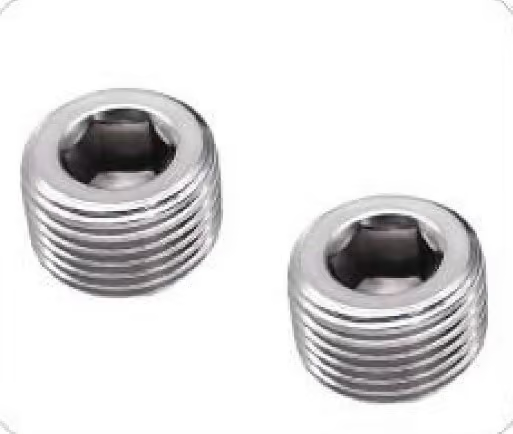
Thread galling is the cold-welding seizure that happens when two stainless steel threads are tightened against each other: the protective oxide film breaks at the contact points, friction heat welds the bare metal together, and the joint locks solid — often twisting off or tearing threads before it lets go. Austenitic stainless is among the most galling-prone of metals, which means the very fittings that resist corrosion best are the ones most likely to seize at assembly. Here is why it happens on our parts and how to beat it.
Key takeaways
- Galling is adhesive wear: oxide film on the threads breaks under load, bare metal spots weld from friction heat, and the weld rips material out of the softer side — stainless-on-stainless is the classic pairing because both surfaces carry the same film and similar hardness.
- Stainless NPT into a stainless port is a high-risk joint: the taper wedges the flanks together as it tightens, multiplying contact pressure and sliding friction.
- Prevention beats repair: a process-compatible lubricant or anti-seize, slow tightening, clean undamaged threads, correct torque, and — where the design allows — a dissimilar or harder mating pair.
- A galled joint is a scrap joint: the metal is torn and transferred, loosening re-damages it, and the reliable fix is replacement of the fitting, with the port inspected and repaired only by an approved method.
Why stainless seizes
Most metals gall under the wrong conditions, but austenitic stainless — 304, 316, 316L — is the repeat offender for two reasons. First, its corrosion resistance comes from the same oxide film that makes it prone to adhesion: when thread contact pressure and friction shear that film off the high points, bare stainless meets bare stainless, and the identical crystal structures bond readily. Second, stainless dissipates friction heat poorly and runs a high coefficient of friction, so the heat that drives the micro-welds builds fast. The damage is cumulative: each pass tears material, roughens the flanks, enlarges contact area, and builds stronger bonds until the joint seizes. On a fitting line this shows up at the obvious places — compression nuts running onto stainless bodies, NPT adapters threading into stainless valve ports, plugs and bleed fittings seated after a long service interval. The taper makes NPT especially treacherous: every additional turn wedges the flanks harder, so the joint generates more friction precisely as engagement increases. Which thread form you are dealing with matters too, since the taper does part of the sealing work — the identification guide is NPT vs G (BSP) threads.
The prevention levers
| Lever | What it prevents | Trade-off |
|---|---|---|
| Process-compatible lubricant or anti-seize | Friction and metal-to-metal contact; the single most effective measure | Must suit the service — oxygen, food and high-purity lines restrict chemistry; lubrication changes torque-to-load, so use torque values for the lubricated condition |
| Slower tightening | Friction heat; power-driving stainless is the classic trigger | Adds seconds per joint; use hand tools or low-speed drivers on final engagement |
| Clean, undamaged threads | Debris and roughness that seed galling | Inspection time; reject burred or previously galled parts rather than forcing them |
| Correct torque, no over-tightening | Contact stress that drives adhesion | Under-tightening leaks — follow the fitting maker’s torque or turn-of-nut guidance |
| Dissimilar or harder mating pair | Like-on-like adhesion — a harder or different-alloy partner work-hardens differently and bonds less | Needs design freedom: 304 against 316, or a plated/hardened component; confirm corrosion and strength still fit the service |
In practice the first three levers solve most field problems: lubricate what the process allows, run the last turns slowly by hand, and never force questionable threads. Where the duty is repetitive — production panel assembly — pre-applied dry-film lubricant or batch-applied anti-seize removes the on-site variable. Torque discipline is part of good installation practice, walked through in how to install compression fittings.
When a joint galls anyway
A joint that seizes mid-assembly, or one that resists removal with rising torque, is telling you the surfaces have welded. Do not power through: forcing it twists off fittings, wrecks ports, and sends debris into the line. The honest prognosis is replacement — galled metal is torn and transferred, and loosening then retightening just re-damages the sealing faces. Inspect both sides: the fitting is usually scrap, and a galled port is repaired only by an approved method. If galling recurs at the same joint, change the system: add lubrication, slow the assembly, or change the mating pair. Note the difference from stripping — galling seizes from adhesion with torn, smeared metal; stripping spins free from overloaded threads with sheared crests. One locks, one slides.
FerruleX quotes compression fittings, plugs and adapters with threads machined and cleaned for assembly — and we will pre-apply anti-seize or specify a dissimilar pairing on request where the service allows it. Name the thread standard, the service and any lubrication restriction on the RFQ. Request a factory quote.
FAQ
How do you fix galled threads? Usually by replacing the fitting. Galling tears and transfers metal, so loosening and reusing the parts re-damages the sealing faces; the reliable fix is a new fitting, with the port inspected and repaired only by an approved method such as re-tapping within limits. If galling repeats at one joint, change the process — lubrication, slower assembly, or a different mating pair.
What is the difference between thread galling and stripping? Galling is adhesive seizure: friction welds the surfaces, the joint locks or drags, and metal shows tearing and smearing. Stripping is mechanical overload: the threads shear and the joint spins free. Galled joints fight back with rising torque; stripped joints let go.
What lubricant prevents stainless thread galling? Any process-compatible anti-seize or lubricant strong enough to keep the oxide films apart — molybdenum-disulfide, graphite, PTFE-based or proprietary anti-galling compounds are the usual choices, and several standards-adjacent sources recommend lubricants carrying those solids. The constraint is the service: oxygen, food, pharmaceutical and high-purity duties restrict chemistry, and lubricated joints need torque values calculated for the lubricated condition.
Are NPT threads into stainless ports especially prone to galling? Yes. The tapered threads wedge the flanks together as engagement increases, raising contact pressure and sliding friction at the same time — exactly the conditions that break the oxide film and weld the surfaces. Slow assembly, a service-compatible sealant or anti-seize, and stopping at proper engagement rather than forcing extra turns are the standard defenses.
Can I mate stainless threads to stainless threads at all? Yes, with discipline — most stainless threaded joints assemble fine when lubricated, run slowly, clean, and torqued correctly. If the duty allows it, a dissimilar pairing (different grade or hardness on one side) removes much of the risk; if it does not, the four prevention levers above carry the load.
Which stainless grades gall the most — does switching grades help? Treat grade selection as one lever among several, not a cure. The austenitic grades that make up most fittings can all gall; published galling-threshold test tables show the outcome is pairing-specific, with no reliable ranking of 304 against 316. What the data does support: Nitronic 60 (UNS S21800) exists specifically as a galling-resistant stainless — one maker’s threshold table shows it holding past 50 ksi (345 MPa) against Type 304, where stainless-on-stainless pairings score far lower — which is why it is the standard upgrade for stuck-prone studs and valve trim. Free-machining 303 trades corrosion resistance for machinability, so it is not a shortcut for corrosive duty. And 17-4 PH’s behavior varies with heat-treat condition and mating grade. The honest summary: pair by test data, not by folklore — and when the pairing is fixed, the lubrication and assembly levers from this article do the rest.


