Correct installation matters as much as the alloy. Most first-time leaks on stainless steel compression fittings come from short insertion, hard tube or skipping the ferrule order — not from the forging itself. The good news: five disciplined steps prevent nearly all of them.
Key takeaways
- A compression joint seals only when the tube is cut square, deburred, fully seated to the body shoulder and tightened in the prescribed ferrule order — most first-time leaks trace to one of those four, not to the fitting.
- The standard makeup is finger-tight plus 1-1/4 to 1-1/2 turns for common stainless double-ferrule sizes — more damages the ferrules, less leaves the joint under-made.
- Ferrules deform permanently on first makeup: every remake needs new ferrules on a freshly cut tube section, and mixing ferrule brands in one fitting is a leak waiting to happen.
Tools and preparation
You need less than you think: a proper tube cutter (not a hacksaw — saws leave an angled, work-hardened end), a deburring tool for the ID and OD, and calipers if the tube origin is uncertain. Cut on a marked line, rotate the cutter rather than forcing it, and check the end against a square. A ragged or oval end cannot seat to the shoulder and cannot take an even bite — the leak is decided at this step, long before the nut turns.
The five steps, in order
- Cut square and deburr. ID and OD burrs both matter: an ID burr restricts flow and starts a turbulence point; an OD burr sits between the ferrule and tube and prevents the bite.
- Slide on nut, then back ferrule, then front ferrule — in that order. On a double-ferrule fitting the front (conical) ferrule faces the body; reversing them produces a joint that assembles but never seals.
- Insert the tube to the body shoulder. Full insertion positions the ferrules over the correct tube zone. Partial insertion — the most common field error — leaves the bite on the wrong section and the joint weeps under pressure.
- Tighten to the factory prescription. The standard makeup for common stainless double-ferrule sizes is finger-tight plus 1-1/4 to 1-1/2 turns, or the maker’s gauge where one exists. Over-tightening swages the ferrules past their design set and damages them; under-tightening leaves the bite incomplete.
- Pressure-test before boxing the panel. Leak-detection fluid at working pressure finds what ears cannot — test every new joint, not just the suspicious ones.
Tube hardness
Use tubing that meets the hardness range for double-ferrule service — for most stainless instrument work, fully annealed tube in the fitting maker’s specified range. Hard hydraulic tube can refuse a proper bite: the ferrule skates instead of swaging, and the joint leaks on gas service no matter how carefully you tighten. If the tube’s history is unknown, say so on the RFQ — tube hardness changes the recommended ferrule set and sometimes the whole fitting choice.
Leak troubleshooting
When a new joint weeps, diagnose before you reach for the wrench:
| Symptom | Likely cause | Fix |
|---|---|---|
| Weeps immediately at pressure | Under-tightened or tube not bottomed | Tighten in small increments; re-seat |
| Leaks after days of service | Hard tube — ferrule never bit | Replace tube with annealed; new ferrules |
| Leaks at remake | Reused ferrules on old bite marks | New ferrules; cut tube to fresh section |
| Leak plus visible scoring | Mixed ferrule brands or debris in set | Rebuild with one matched brand set |
| Leaks though “fully tight” | Over-tightened — ferrule crushed | Replace ferrules; remake correctly |
The pattern to respect: one corrective turn, then test. Grinding the nut around and around looking for tightness only destroys parts.
Remaking a used joint
Open the nut, withdraw the tube, and discard the ferrules — they are single-use items that deformed permanently on first makeup. Inspect the tube: if the bite marks are deep or the section is work-hardened, cut back to an undamaged length and remake from step one with new ferrules. The fitting body and nut survive many cycles; the ferrules never do.
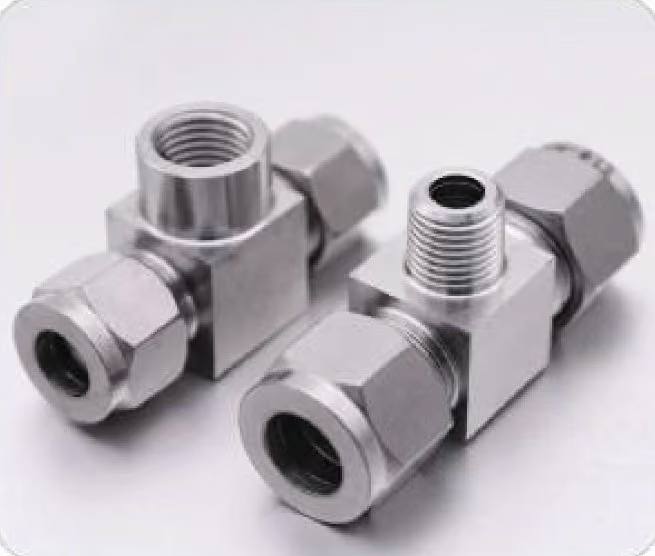
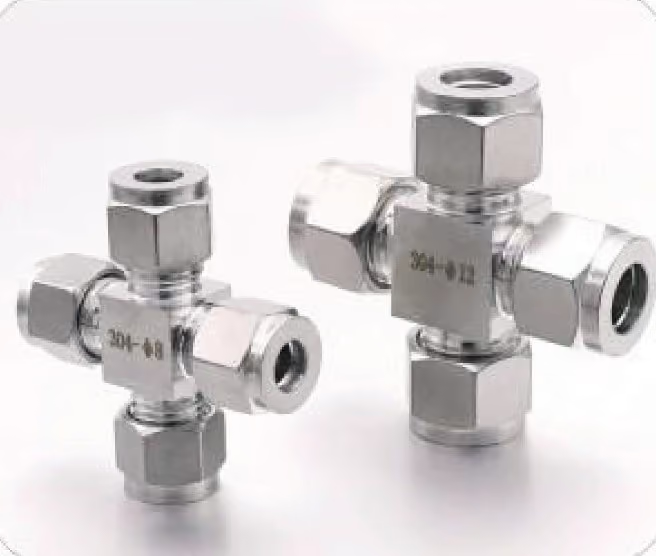
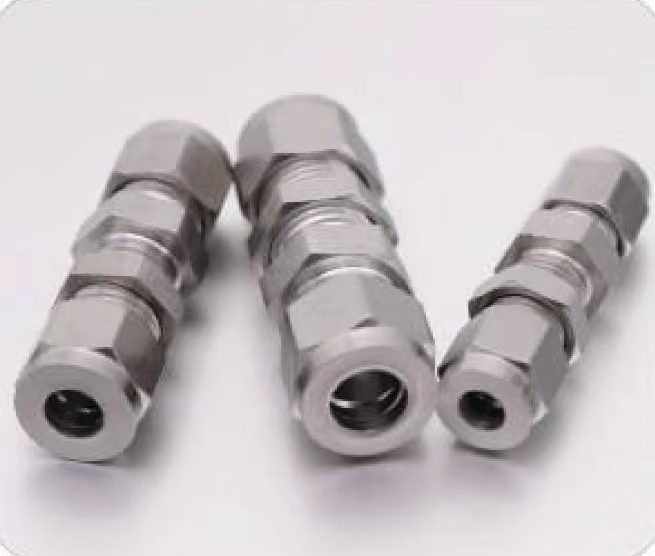
FerruleX stocks common sizes — see compression fittings and our primers what is a compression fitting and single ferrule vs double ferrule for the mechanism behind these rules. For sizes or mixed ends, request a factory quote.
FAQ
How many turns past finger-tight should I go? For common stainless double-ferrule sizes, 1-1/4 to 1-1/2 turns past finger-tight is the standard prescription, or the maker’s gap gauge reading where one exists. Large sizes and some series differ — follow the size-specific spec when it exists.
Can I reuse compression ferrules? No. Ferrules deform permanently on first makeup and hold their set. Reused ferrules sit on old bite marks, seal poorly and usually leak immediately on gas service. New ferrules cost little; remaking with them is the only correct procedure.
Why does my joint leak even though I tightened hard? Either it is under-made (tube never bottomed, so the bite landed in the wrong place) or over-made (the ferrule crushed past its sealing geometry). Hard tube can also prevent any bite at all. Diagnose with the table above rather than adding more torque.
Do I need a special tool to install compression fittings? No special tooling — a tube cutter, deburring tool and wrenches cover the job. Preset torque tools and make-up gauges help on production panels where every joint must match, but hand assembly to the turn-count prescription is the field standard.
What tube hardness works for double-ferrule fittings? Fully annealed stainless tubing in the hardness range the fitting maker specifies seats most reliably. Hard hydraulic tube resists the swage and leaks on gas lines — flag tube hardness on the RFQ if there is any doubt.