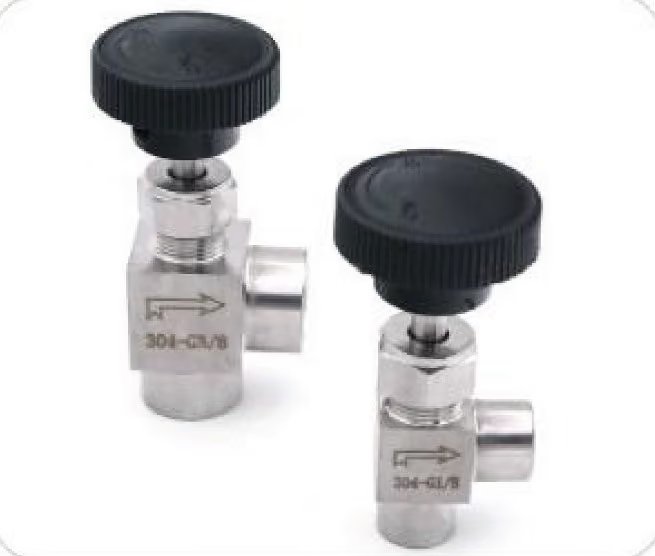
A double block and bleed valve is an isolation arrangement with two independent blocking seals in the same line and a bleed or vent connection between them: close both blocks, open the bleed, and trapped pressure vents while the upstream seal proves itself by holding. It exists to give maintenance a verifiable, depressurized space between the process and the work. Here is how the configurations differ and where instrument duty actually needs them.
Key takeaways
- Double block and bleed means two barriers with a bleed between: the bleed vents trapped fluid and proves the upstream seal before anyone opens the line — single block and bleed provides one barrier and no such proof.
- The term carries two definitions: API 6D defines a DBB valve as one valve with two seating surfaces sealing against pressure from both ends plus a cavity bleed; OSHA-style practice means two separate closed valves with an open vent between them.
- Instrument-scale DBB duty — gauge and transmitter isolation, sampling, calibration — is commonly built from needle valves, manifolds and bleed vents rather than pipeline trunnion ball valves.
- DBB is practice born of risk assessment, not a universal regulation: the hazard, the site standard and the permit decide — specify barriers and bleed routing, not just the acronym.
Single vs double block and bleed
The whole point of the second barrier is redundancy with proof. With a single block and bleed, one closed valve isolates the process and a downstream bleed vents the instrument side — acceptable where a leak past one seal is a nuisance. Double block and bleed puts a second barrier upstream and a bleed in the cavity between: if the first seal weeps, fluid appears at the bleed instead of pressurizing the work side, and the operator knows before opening anything.
| Configuration | Seals | Bleed function | Typical duty | When required |
|---|---|---|---|---|
| Single block and bleed | One isolation seal | Vents instrument side; may reveal seat leak | Low-risk gauge isolation, utility vents | Non-hazardous media, low consequence of a weeping seat |
| Double block and bleed (two valves) | Two independent seals | Vents and monitors the cavity between barriers | Gauge and transmitter isolation on hazardous lines; sampling and injection points | Where one leaking seal endangers people, product or measurement |
| Double block and bleed (single API 6D valve) | Two seating surfaces in one body | Cavity bleed; no positive double isolation under one-sided pressure | Pipeline and process isolation, space saving | Pipeline duty per spec; mind the standard’s caveat |
| Double isolation and bleed (DIB) | Two seats, each sealing one source direction | Cavity relief via external means | Highest-integrity isolation, either barrier must hold alone | Sour or critical service needing a provable single barrier |
One caution from the API definitions: a single-valve DBB seals against pressure from both ends but, by the standard’s own note, not under one-sided pressure — for true two-barrier isolation there, the two-valve arrangement or a DIB valve is the honest answer. This is also why the term clusters around instrumentation manifolds, where block, equalize and vent functions share one body.
Where instrument duty uses it
The instrument-panel version of DBB is smaller than the pipeline version and usually assembled from catalog parts: a needle valve per block, a compression fitting or manifold port as the bleed. The duties that drive it:
| Duty | Why DBB | Alternative |
|---|---|---|
| Pressure gauge isolation on hazardous media | A weeping seat puts process fluid on the gauge; the bleed vents and proves | Single block and bleed for benign media |
| Transmitter calibration and removal | Trapped loop pressure vents through the bleed; second barrier protects the live process | Manifold with integral block and vent valves |
| Sampling and injection points | Cavity bleed confirms seal integrity before the sample point opens | Single valve with downstream purge |
| Custody-transfer and prover connections | Prevents bypass leakage around the prover that corrupts measurement | Blinds and spools where line breaking is acceptable |
The deciding questions are the hazard of the media, the consequence of an undetected seat leak, and the site or permit standard — not a blanket regulation. OSHA’s confined-space rule lists double block and bleed among accepted isolation methods, and API 6D defines the valve configurations, but neither makes DBB mandatory at every instrument. The oil and gas context where this duty concentrates is covered on the oil & gas instrumentation page.
What we quote for DBB-class duty
An honest capability note: we do not build a dedicated DBB valve line, and we will not pretend a catalog single valve is a double barrier. What we quote today is assembled from existing parts — needle valves as the blocks, compression check valves where back-flow protection matters, and compression unions or manifold ports as the bleed. For instrument-side duty, the manifold line now carries two-barrier configurations directly: the 3-valve manifold and 5-valve manifold pair block valves with an integral vent or drain between them, and an instrument bleed valve supplies the tell-tale vent for assembled two-valve arrangements. If the duty genuinely needs a single certified DIB valve, that belongs to a pipeline valve catalog, and we will say so rather than stretch a needle valve into a standard it does not meet.
Send the hookup sketch or a line like “two needle valves with bleed between, 1/2 NPT process, 316” on the RFQ and we quote the assembled configuration with the seat choices spelled out. Request a factory quote.
FAQ
When is double block and bleed required? When a single leaking seal would endanger people, product or measurement and the work needs provable isolation: hazardous media, sampling and injection points, gauge and transmitter work on live process. The trigger is the risk assessment and the site standard — OSHA and API provide methods and definitions, not a blanket mandate.
What is the bleed valve function? The bleed vents the cavity between the two closed block valves to atmosphere or a safe drain. That releases trapped pressure before the line is opened, and any continued flow at the bleed tells the operator the upstream seal is leaking — proof of isolation rather than assumption.
Can a single valve be a double block and bleed? Under API 6D, yes in a limited sense: one valve with two seating surfaces that seal against pressure from both ends plus a cavity bleed. The same standard notes it does not provide positive double isolation when only one side is under pressure, which is why instrument duty usually means two separate valves or a DIB design.
What is a block and bleed valve for a pressure gauge? A gauge isolation arrangement where a block valve sits between process and gauge and a bleed vents the gauge side — single block and bleed for benign media, double block and bleed where the process is hazardous or high-pressure and the seat must be provable before the gauge is opened.
Do I need a special DBB valve for instrument panels? Usually not. Instrument-scale DBB is commonly assembled from a needle valve per block plus a bleed fitting or manifold port from the standard catalog, routed per the hookup drawing — cheaper, serviceable, and honest about what each component is.


