A corrugated metal hose assembly is a made-to-order component: the core, braid, length and end fittings are chosen for your service, not picked off a shelf. A complete spec gets an accurate quote the first time; a vague one gets questions back. Here is the checklist.
Key takeaways
- A hose RFQ needs seven facts to be quotable: media, temperature, working pressure (including surges), size and length, end connections, movement or vibration duty, and cleanliness requirements.
- Pressure claims are cold claims: temperature derates the hose, and pulsating or shock service demands a lower working pressure than the catalog table suggests.
- Corrugations cost pressure drop — a corrugated hose flows noticeably worse than smooth pipe of the same bore — so size for velocity and ΔP, not just the end fittings that fit.
The seven-line spec at a glance
| Spec item | What to state | Why it matters |
|---|---|---|
| Media | Fluid or gas, plainly named | Picks the core and braid alloy |
| Temperature | Service temperature, internal and external | Derates the pressure rating; sets seal limits |
| Working pressure | Maximum steady, plus surge behavior | Pulsation and shock demand lower working ratings |
| Size and length | Nominal bore; overall vs live length | Live length absorbs the movement |
| End connections | Standard on each end | The welded transitions are built to match |
| Movement and cycle duty | Axial/lateral/angular movement, how often | Decides pitch, bend radius and live length |
| Cleanliness and documentation | Degreasing, certificates, photos | Scheduled at quote, not scrambled after |
Start with the service
Media comes first because it picks the alloy: SS304 core and braid cover general air, water and oil service; SS316 or 316L where chlorides or marine exposure are present (see SS304 vs SS316); special alloys for aggressive chemicals. State the media plainly — “process fluid” is not a spec. Temperature comes next: every hose working-pressure rating is a cold rating that derates as temperature rises, and the braid and seals must survive the actual service temperature.
Pressure: working, pulsating and proof
Quote the maximum working pressure, then add the duty pattern. Constant pressure is kind; pulsating pressure — reciprocating compressors, metering pumps, fast valves — fatigues corrugations and braid and demands a lower working rating than the catalog figure, and true shock conditions demand more margin. State surges honestly on the RFQ. Finally, ask for the proof or hydrostatic test with the supply: a hose assembly should arrive tested well above its working pressure, with the certificate available on request. If your line carries gas, say so — gas service raises the integrity bar.
Size and length: overall vs live
State the nominal bore and the length — but know which length you are quoting. The overall length is end to end; the live length is the corrugated section between the end fittings, and it is the live length that absorbs movement. A hose that looks long enough overall may have too little live length to flex without stress, and too much live length on a vertical run droops and fatigues under its own weight at temperature. If the assembly replaces an existing one, measure the live section, not just the tip-to-tip dimension.
End connections
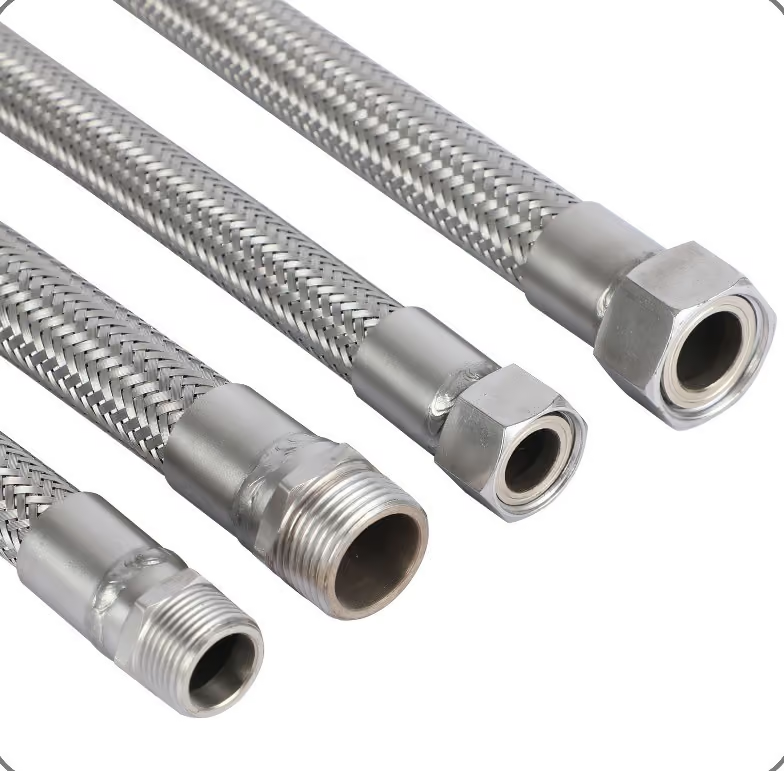
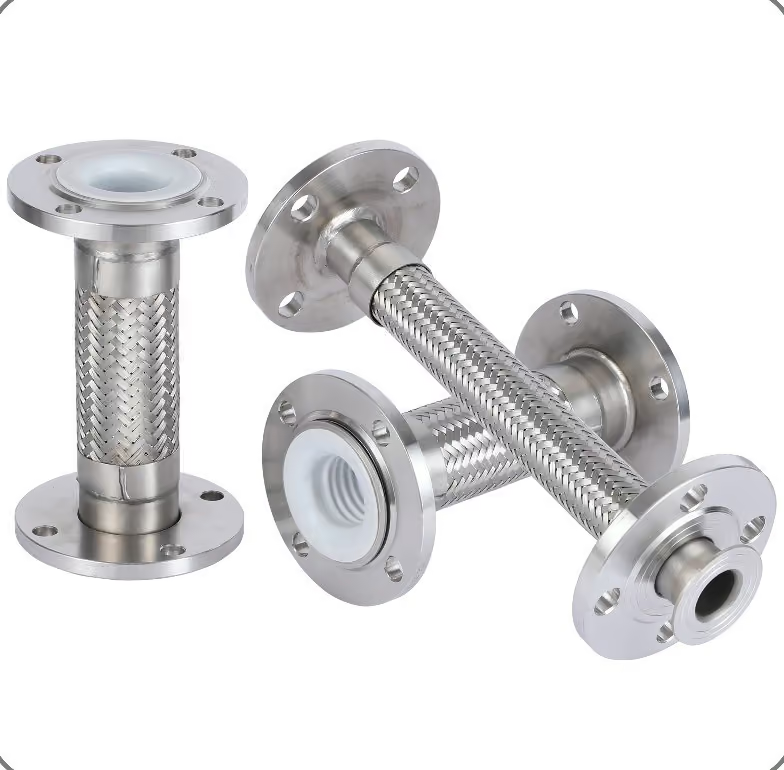
Flanges (fixed or swivel), NPT or G threads, tri-clamp sanitary ends, weld ends — the choice belongs to the equipment being joined. Tri-clamp ends belong on sanitary process equipment and follow the clamp sizing of the line; the clamp side is covered in what are tri-clamp fittings, which is worth reading before ordering clamp-end hose. Specify the standard on each end when they differ, so the welded transitions are built right the first time.
Movement and cycle duty
This is the field most often left blank, and the one that most often kills the hose. Tell the factory what the assembly must absorb: axial growth, lateral offset, angular misalignment, vibration — and how often. Static installation, occasional thermal cycling, and continuous dynamic flexing are three different products: dynamic duty needs generous live length, a close-pitch core and a bend radius well above the minimum. Large movements are beyond what a single hose should take — beyond roughly a hundred millimetres of axial travel, a proper expansion joint is the honest answer, not a longer hose.
Braid, cleanliness and documentation
Braid layers set the pressure class — one for moderate duty, two where the rating demands — plus armor or sleeves where abrasion threatens the braid. State cleanliness and documentation on the RFQ: degreased for oxygen service, cleaned and capped for food or pharma, standard shop finish for utilities, with certificates and photos scheduled up front rather than scrambled for after dispatch.
Pressure drop and velocity
The corrugation profile that makes the hose flexible also makes it rough: pressure loss through corrugated hose is substantially higher than through smooth pipe of the same bore — for some profiles close to double. On pumped or high-flow runs, size the hose for acceptable velocity and ΔP, not merely to match the end connections.
FerruleX builds corrugated hose assemblies to order — start from the corrugated hose category, the flanged corrugated hose style for pipe connections, or the threaded hose style for utility jumps, and send the seven-line spec for a factory quote.
FAQ
What do I need to quote a metal hose assembly? Media, temperature, maximum working pressure (with surge behavior), nominal bore and length, end connections on each end, movement and cycle duty, and any cleanliness or certificate requirements. Those seven lines make the RFQ quotable without a round of questions.
Does hose length mean overall or live length? Overall length is end to end; live length is the flexible corrugated section between the fittings. Movement is absorbed by the live length, so specify or measure that section — a hose with adequate overall length can still be too stiff or too short to flex as intended.
How much pressure drop does corrugated hose add? Substantially more than smooth pipe of the same bore — for some corrugation profiles close to double. On high-flow runs, check velocity and pressure drop before sizing; the bore that matches your end fittings may still be undersized hydraulically.
What end connections can a hose assembly have? Flanged (fixed or swivel), NPT or G threaded, tri-clamp sanitary, weld ends, and mixed combinations — one style per end where the joined equipment differs. Name the standard on each end so the welded transitions are built correctly.
When is a hose the wrong solution entirely? Very large thermal movements — beyond roughly a hundred millimetres of axial travel — belong on a purpose-built expansion joint, and permanently misaligned pipe runs deserve proper re-routing. A hose is a flexible jumper, not a substitute for pipe stress design.