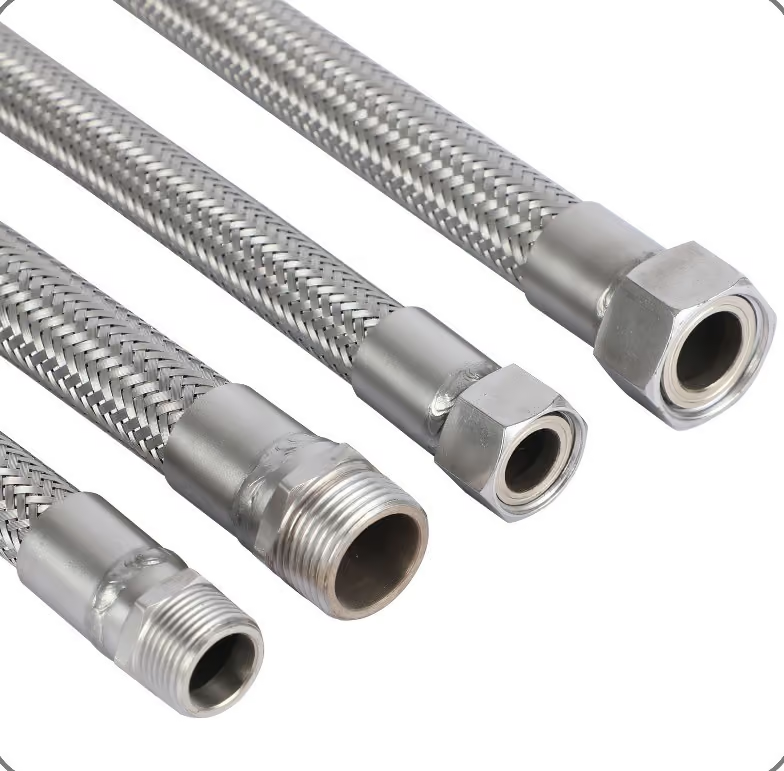
“Corrugated or braided?” is the wrong question once you see how corrugated stainless steel hose is built: virtually every flexible metal hose is both. A thin-wall corrugated core supplies the flexibility; a woven wire braid over it supplies the pressure capacity. The real choices — corrugation profile, pitch, braid layers — are what this guide walks through.
Key takeaways
- Flexible metal hose is a system, not a single wall: a corrugated stainless core flexes, and a wire braid cover restrains the core from elongating under pressure — unbraided corrugated tube would extend like a spring and fail quickly in pressure service.
- Annular corrugations (complete rings) flex and drain better; helical corrugations (one continuous spiral) suit higher pressure and smoother flow; close pitch (more corrugations per length) bends tighter and lasts longer in flexing duty than open pitch.
- The flexibility-versus-pressure trade-off is decided by corrugation profile and braid: more flexibility means lower pressure capacity, and a second braid layer buys pressure back — while bending below the minimum bend radius kinks corrugations permanently.
What the two words actually mean
The corrugated core is a thin-wall stainless tube formed into a series of corrugations — each one a tiny accordion fold. Bending and movement open and close the folds instead of stressing the wall, which is why the hose survives thermal growth, vibration and misalignment that would crack rigid pipe. The braid is a sheath of woven stainless wire over the core. It does almost nothing to the hose’s flexibility — its job is restraint: internal pressure pushes axially on the corrugations, and without the braid the hose would elongate uncontrollably under that thrust. The braid carries it, raises the working pressure, damps vibration and shields the core from abrasion. So “braided hose” in a catalog almost always means braid-reinforced corrugated hose — the two features are partners, not alternatives.
Annular vs helical, close vs open pitch
Two geometry choices define the core’s character:
| Profile | Geometry | Character | Typical use |
|---|---|---|---|
| Annular | Complete rings at right angles | Flexes freely, drains well | Steam, condensate, general duty |
| Helical | One continuous spiral | Higher pressure for wall thickness, smoother flow, traps condensate on horizontal runs | Gas, higher-pressure transfer |
| Close pitch | More corrugations per length | Tighter minimum bend radius, longer flex life | Vibration and frequent movement |
| Open pitch | Fewer corrugations per length | Stiffer, more robust profile | Exhaust, static or slow-moving runs |
Annular close-pitch is the default for instrument and steam jumpers that must flex repeatedly; open-pitch helical appears where flexibility hardly matters.
The flexibility–pressure trade-off
Every design change that adds flexibility removes pressure capacity, and vice versa. Deeper, closer corrugations bend easily but present a weaker wall to pressure; shallower profiles hold pressure but fight bending. The braid is the balancing tool: one layer suits moderate working pressures, and a second braid layer raises the rating further at a modest cost in stiffness and price. This is why catalog tables pair each hose type with its own working-pressure column — there is no single “stainless hose” rating, and quoting a hose without its braid specification is quoting half a product.
Kinking, bend radius and abuse limits
The failure that ends most hose lives early is simple abuse: bending tighter than the rated minimum bend radius. Past that radius the corrugations take a permanent set; in dynamic service the roots work-harden, one corrugation flattens and then cracks circumferentially. Respect three numbers and most of this disappears: the minimum static bend radius for installation, a larger dynamic radius for anything that flexes in service — often double or more of the static figure — and the hose’s live length, the corrugated section between end fittings, which must be long enough to absorb movement without forcing tight arcs. Support vertical runs, avoid twisting during installation, and use elbows where the routing needs a sharp change of direction rather than forcing the hose into it.
Typical services and how to choose
- Steam and condensate jumpers: annular core, close pitch, single braid — drains between cycles, flexes with thermal growth.
- Gas and higher-pressure transfer: helical or heavier-wall profile, double braid where the pressure class demands it.
- Vibration isolation at pumps and compressors: close-pitch annular with braid sized for the pressure; the braid damps as well as restrains.
- Abrasive or washdown environments: add an interlock armor or protective sleeve over the braid.
FerruleX builds corrugated stainless hose assemblies to order — browse the corrugated hose category or the male-female threaded hose and tri-clamp corrugated hose styles, and send media, pressure, movement and end connections for a factory quote.
FAQ
Is braided hose different from corrugated hose? No — almost all flexible metal hose is a corrugated core with a braid cover. The braid restrains the core from elongating under pressure and raises the working rating; the corrugations supply flexibility. Unbraided corrugated tube exists for low-pressure or shielding uses but is not a pressure hose.
What is the difference between annular and helical corrugation? Annular corrugations are complete rings perpendicular to the hose axis; helical is one continuous spiral. Annular flexes and drains better — the usual pick for steam; helical carries higher pressure for a given wall and flows gas more smoothly, but can hold a film of condensate on horizontal runs.
What does hose pitch mean? The spacing of the corrugations. Close pitch packs more corrugations into the length, giving a tighter minimum bend radius and longer life in repeated flexing; open pitch is stiffer and more robust where flexibility hardly matters.
Why does my metal hose fail at one corrugation? Usually a bend-radius or flexing abuse: corrugations bent past their minimum radius take a permanent set, the roots work-harden in dynamic service, and one corrugation flattens and cracks first. Check the installed radius, the dynamic radius and the live length before blaming the hose.
Does adding a second braid layer matter? Yes — each braid layer raises the working-pressure capacity of the same core, at the cost of some stiffness and price. It is the standard way to lift a flexible hose into a higher pressure class without changing corrugation profile.
Related: how long stainless hoses last.


