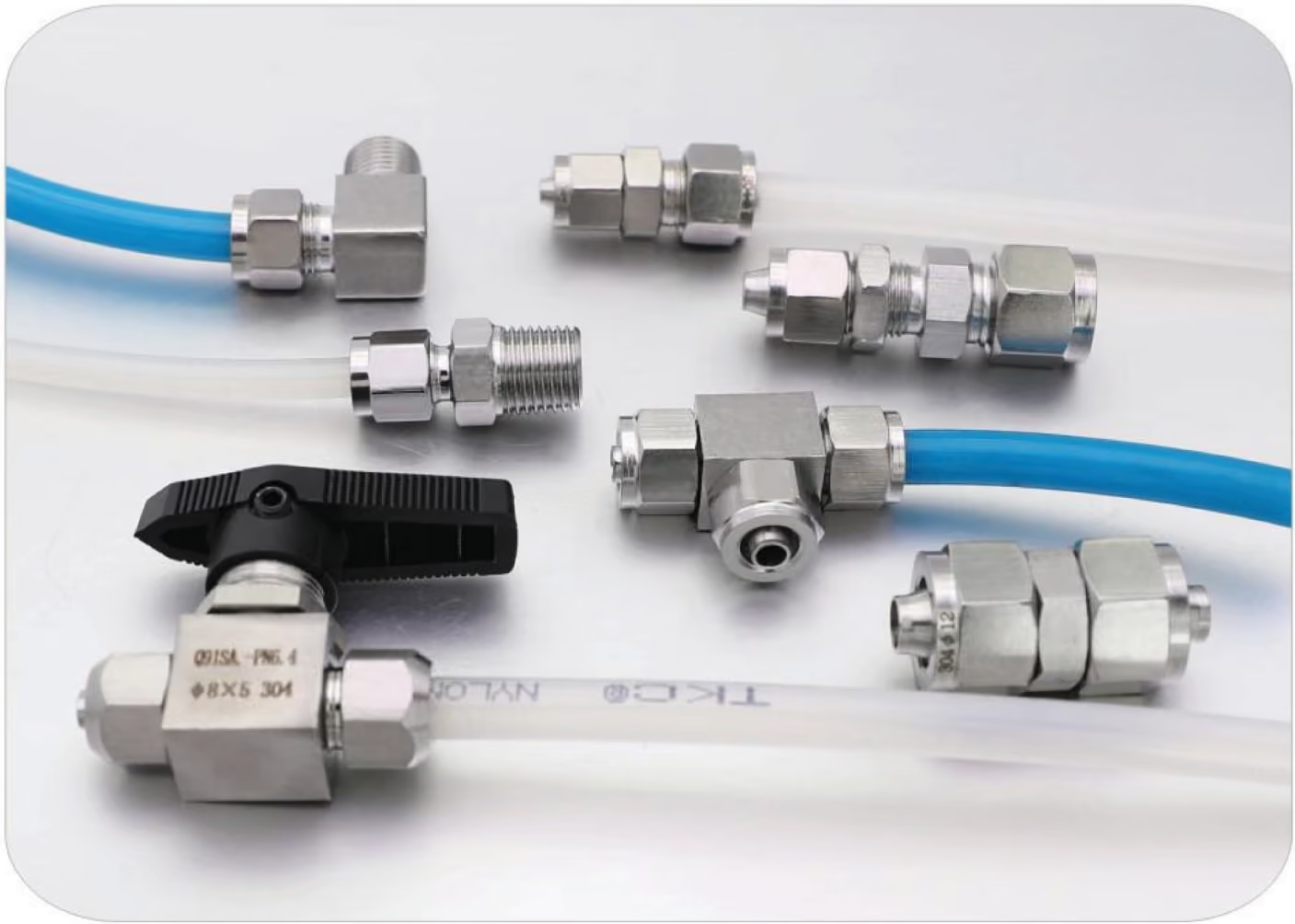
Stainless steel push-to-connect fittings promise the best of both worlds: tool-free assembly like a plastic push-in, with a metal body that shrugs off washdown, heat and chemical exposure. Mostly that is true — and the metal body genuinely matters on food, pharmaceutical and hot-service panels. But “metal” is not a blank check. The seal inside is still an elastomer, the jaws still demand tubing within a tight window, and the best stainless push-in is still a pneumatic-class part, not a hydraulic one. Here is where the technology actually stops.
Key takeaways
- The seal is an O-ring, not the jaws: metal collet teeth grip the tube mechanically while a flexible seal ring does the sealing — a stainless body does not change that chemistry.
- Seal choice is service choice: FKM roughly −20 to +200 °C, NBR to about +120 °C, EPDM for steam and water to about +150 °C — order the seal with the fitting.
- Tubing must be in window: pneumatic push-in assumes Shore A ~95 plastic tube held to about ±0.1 mm on OD, cut square and scratch-free; out-of-window tube leaks or lets go.
- Ratings are honest but modest: all-stainless pneumatic series typically run around −0.95 to +10 bar and up to +150 °C with FKM — better than plastic on temperature, not automatically higher on pressure.
- Vacuum, vibration and pulsing are the edge cases: most makers rate vacuum for flow duty but warn against vacuum-holding, and several caution against vibration and impact loads.
How the seal actually works
Open a push-to-connect fitting and two elements do two different jobs. The collet — the spring-loaded ring with teeth you see at the release collar — grips the tube and resists pull-out. The seal — an elastomer ring deeper in the body — presses on the tube OD and does the actual pressure sealing. Maker literature for metal-bodied versions states exactly this split: a stainless grab ring for grip, a nitrile or FKM seal ring for the pressure boundary. This matters for buyers in two ways. First, the failure modes are independent: a tube can grip fine and still weep past the O-ring, or seal and still push out under load. Second, the wetted elastomer sets the service window — a 316 body with an NBR seal is still an NBR-sealed joint. Match the seal to the media and temperature, not the body to the badge.
Tube hardness and OD tolerance
Push-in fittings assume tubing inside a defined envelope. Pneumatic practice centers on plastic tube — nylon, PE or polyurethane at about Shore A 95 — held to roughly ±0.1 mm on outside diameter, with ends cut square, deburred and free of score marks. Out-of-window tube fails predictably: too soft and the jaws tear or the seal extrudes; too hard or too rough and the seal cannot conform. That is the hidden incompatibility on stainless panels: instrument tube from the compression-fitting world — harder, tolerance-rated differently — is not what a push-in collet was designed to bite. If the panel mixes both systems, keep push-in on plastic tube and compression on metal tube, and read how push-to-connect fittings work before mixing them.
Pressure and temperature
Honest numbers, because this is where marketing outruns the datasheet. Plastic-body pneumatic push-ins are typically 10-bar, −10 to +60 °C parts. All-stainless pneumatic series with FKM seals run about −1 to +10 bar and −5 to +150 °C, with steam-capable variants. Nickel-plated brass all-metal series reach about 20 bar and 150 °C. The very high ratings belong to specialized brass fluid lines, not general pneumatic push-ins. So: metal buys you temperature, corrosion resistance and cleanability — not automatically pressure. If the circuit needs 40 bar, push-to-connect is the wrong technology regardless of body material, and push-to-connect vs compression on stainless tubing is the comparison to make.
Seal materials order the temperature ladder: FKM for oil, fuel and heat to roughly +200 °C; NBR for general pneumatic duty to about +120 °C; EPDM for steam and hot water to about +150 °C — but never for oils. Order the seal as a line item.
Where compression still wins
Four territories stay compression country. Vacuum holding: several makers rate push-ins to −0.95 bar for flow duty but explicitly warn against vacuum-holding service such as leak testers, where the joint can weep. Vibration and impact: metal push-in instructions caution against locations where vibration, impact or surge pressure occur — precisely where a bite-type joint’s mechanical grip is strongest. High safety factors: high-pressure and high-purity instrument work stays with compression for the verifiable, remakeable metal-to-metal seal. Metal tube: as above — push-in assumes plastic tube. The compression fittings range covers that ground, and our push-to-connect series covers the plastic-tube panels.
RFQ lines
- Body and seal:
316 body, FKM seal— the seal is half the part. - Tube spec:
PU 8 mm OD, Shore A 95— size, material and hardness together. - Service:
air, max 6 bar, 60 °C ambient— actual, not nameplate. - Duty: state vacuum-holding, vibration or pulsing explicitly if present — each is a stated edge case.
FAQ
Do stainless push-to-connect fittings seal on the collet or an O-ring? On the O-ring. The collet’s teeth are the grip; a flexible seal ring inside the body seals against the tube OD. That is why seal material belongs on the RFQ next to body material — a stainless body with the wrong elastomer fails exactly like a plastic one.
Can I use stainless push-in fittings with metal instrument tube? Not as designed. Push-in collets and seals assume plastic tubing near Shore A 95 within about ±0.1 mm OD. Hard or differently-toleranced metal tube does not seal or grip reliably in a push-in body — put metal tube on compression fittings.
Are metal push-to-connect fittings rated higher pressure than plastic? Not by default. Plastic pneumatics run about 10 bar; the flagship all-stainless pneumatic series also sit around 10 bar with a wider temperature band (to +150 °C). Specialized brass all-metal series reach about 20 bar. Buy metal for temperature, corrosion and cleanability — not for a pressure jump.
Can I use push-to-connect fittings on vacuum? For vacuum flow and generation duty, generally yes — makers rate to about −0.95 bar. For vacuum holding, such as leak testers or pick-and-place cups holding a part, follow the maker cautions: at least one major stainless series explicitly warns against vacuum-holding service because the joint can leak. Compression or a rated vacuum fitting is the safe call there.
Which seal for steam, which for oil? EPDM for steam, hot water and CIP-type duty to about +150 °C — but never for oils or fuels. FKM for oil, fuel and higher heat, roughly −20 to +200 °C. NBR is the general-purpose pneumatic seal to about +120 °C. State the media and temperature, and order the seal with the fitting.


