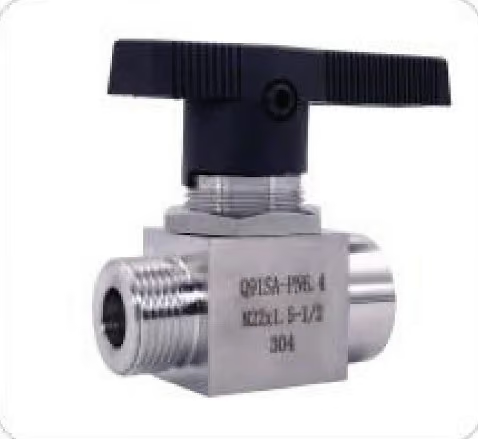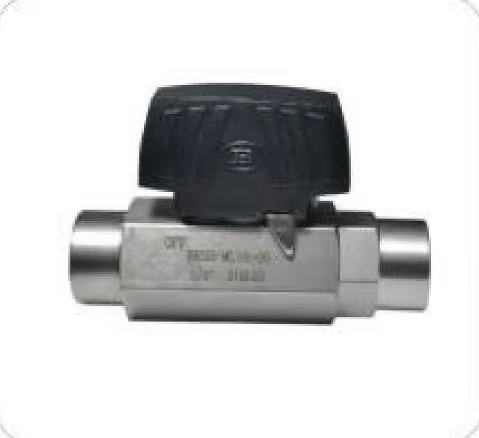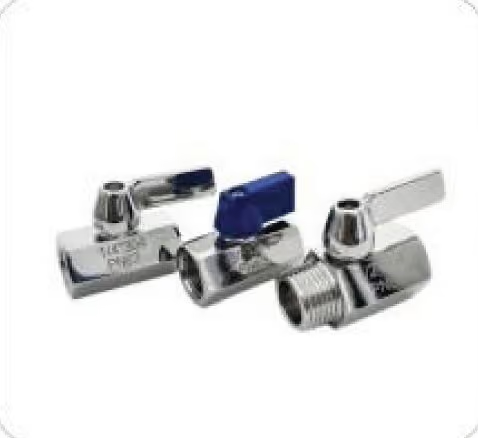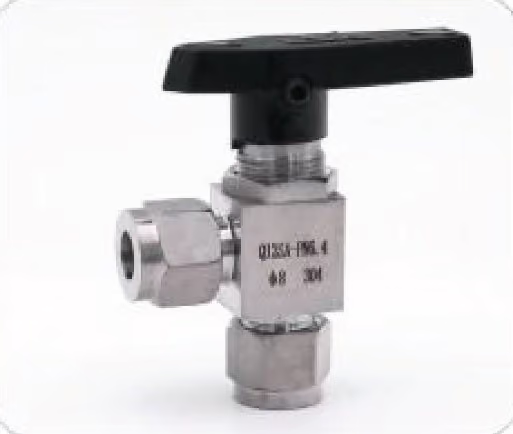
Ball valve seat materials are where the valve’s temperature and pressure ceilings actually live — not in the body, not in the ball, but in the polymer ring the ball turns against. Pick the seat right and the valve is invisible for years. Pick it by habit and the failure arrives on a schedule: cold-flowed seats leaking at temperature, a steam line eating virgin PTFE, a filled seat shedding fibers into a pure product. The seat is a one-line RFQ item; here is how that line earns its place.
Key takeaways
- The seat is the valve’s working limit: PTFE in published catalogs runs about −50 to +200–230 °C depending on grade and maker; PEEK runs to about 260–270 °C with far higher pressure capability.
- A floating ball valve seals by seat elasticity preload plus line pressure driving the ball onto the downstream seat — past some size-and-pressure combination, PTFE cold-flows.
- Filled PTFE trades purity for muscle: glass fiber cuts cold flow, carbon fiber takes heat and steam, MoS2 cuts wear — each fill has its own chemical no-fly list.
- PTFE’s chemical legend has two exceptions that matter: molten alkali metals and fluorine. Steam is not a friend of virgin PTFE either.
- PEEK is not automatically better — it is the answer to heat, pressure and wear questions PTFE cannot take, at a price and with its own chemical boundaries.
Why the seat decides the limit
In a floating ball valve, the ball rides between two seats, and the seal forms where the downstream seat meets the ball. The seat carries the seal by its own elastic preload; line pressure then drives the ball against it, and the sealing force grows with pressure. That load is exactly what limits the material: PTFE and its reinforced grades have finite compressive strength, and past some combination of size and differential pressure the seat cold-flows — creeps out of its gland until the sealing line no longer closes. This is why two valves with identical 316 bodies rate at wildly different pressures, and why the seat line on the datasheet deserves more attention than the body line. The same pressure-dependence has a floor as well as a ceiling: at very low differential pressure the seat’s own elastic preload is nearly all the sealing force there is — and that end of the range shows up in service more often than the datasheets suggest. The rest of the working stack is its own post — valve trim materials: 316 vs 17-4 PH vs 410/420 — and the body-side pressure logic in ball valve ratings explained.
PTFE families
Virgin PTFE is the default for a reason: chemically inert to almost everything the process world carries, low friction, low cost. Published service bands from the catalogs run from roughly −50 °C at the cold end to 200–230 °C hot, with maker and grade spreading the top of the band — one catalog’s virgin PTFE seats cap at 200 °C, another’s modified PTFE runs to 270 °C. Where virgin PTFE falls short is mechanical: it cold-flows under sustained seat load and wears faster than filled grades. The fills buy muscle at a price:
- Glass fiber (15–25%) — roughly halves cold flow and lifts wear resistance and pressure class; the workhorse fill. Not for hydrofluoric acid or strong hot caustics, which attack the silica, and not for ultra-pure or food contact where fiber is contamination.
- Carbon fiber / carbon — heat and abrasion resistance, naturally anti-static behavior, and the documented pick for steam and hot-oil duty; some catalogs rate carbon-filled seats where virgin PTFE fails. Avoid oxidizing acids such as nitric.
- MoS2 compounds — added to glass-filled grades for lower friction and better wear life, at slightly higher cost.
PEEK and beyond
PEEK is the engineering polymer’s answer to the questions PTFE cannot take: continuous service to about 260–270 °C in the catalogs, pressure capability an order of magnitude above virgin PTFE — one maker rates PEEK seats to over 400 bar where PTFE sits near 70 — plus creep resistance and dimensional stability that keep the sealing line closed under loads that would flow PTFE. It earns that on steam, hot oil, high-cycle and high-differential duty, and it costs accordingly. Its boundaries are chemical, not thermal: concentrated strong oxidizing acids attack PEEK, and the price reserves it for duty that actually exceeds PTFE. Beyond PEEK the answer stops being polymer at all — metal seats for the hottest, hardest service — but that is a different valve family conversation.
Media compatibility quick check
Three compatibility notes catch buyers most often. First, PTFE’s near-legendary inertness has exactly two process-world exceptions: molten alkali metals and fluorine-bearing fluorinating agents, which attack it outright. Second, steam: virgin PTFE’s practical ceiling sits near 200 °C, and sustained steam at the boundary degrades it — the catalogs that rate steam seats point to carbon-filled PTFE or PEEK instead. Check the maker’s steam rating before committing a PTFE seat to any steam line. Third, the fills have their own lists — glass and hydrofluoric, carbon and hot oxidizing acids — so a media list belongs on every filled-seat RFQ. Our ball valves range quotes seats as their own line.
RFQ lines
seat material— virgin PTFE, RPTFE with the fill named, PEEK.temperature band— normal and upset, fluid and ambient.pressure differential— the number the seat must hold, not just the body class.media list— the compatibility check lives here.cycle frequency— the wear input that separates virgin from filled and filled from PEEK.
FAQ
Is PEEK always better than PTFE?
No — and maker literature says so almost verbatim. PEEK is a different solution to a different set of problems: heat, differential pressure, wear and creep that PTFE cannot carry. For general chemical duty at ordinary temperatures, virgin PTFE remains the cost-effective default, and it seals chemically hostile media PEEK cannot. The question is never which is better — it is which question your service is asking.
What temperature can a PTFE ball valve seat take?
Published bands vary by maker and grade: roughly −50 °C at the cold end and 200–230 °C at the hot end for virgin PTFE, with modified grades running to 270 °C in some catalogs. Treat the maker’s figure for the exact grade as the ceiling, and remember that sustained temperature under seat load is where cold flow starts — the pressure-temperature curve, not the temperature line alone, decides the rating.
Can I use a PTFE-seated valve on steam?
Only inside the maker’s steam rating, and with care. Some makers rate carbon-filled PTFE seats for saturated steam at defined working pressures; others cap PTFE near 200 °C and direct steam duty to PEEK. Virgin PTFE on sustained steam near its ceiling degrades. The steam-specific checks — state, pressure, superheat — are the subject of steam service on stainless valves, and the seat question is exactly where they land.
Does filled PTFE change the chemical compatibility?
Yes — the fill is the new chemical surface. Glass-filled grades lose hydrofluoric acid and strong hot caustics to silica attack; carbon-filled grades avoid oxidizing acids; and every fill is a contamination question in ultra-pure or food service, where virgin PTFE stays the answer. The fill buys mechanical performance, not chemical purity — the media list decides which you need.
Why did my seat start leaking below its rated temperature?
Cold flow under sustained load is the usual mechanism: the seat creeps out of its gland over time at pressures the datasheet seemed to allow, because the rating is a pressure-temperature curve and the seat spent its life at the hot, high-pressure corner. Check the differential pressure at temperature against the maker’s curve, and consider a filled grade or PEEK where the service parks at the corner.
Why does my floating ball valve leak at low pressure?
Because at low differential pressure there is almost no pressure-assist, and the seat’s own elastic preload is doing nearly all of the sealing. Floating designs count on line pressure driving the ball onto the downstream seat; when the pressure barely pushes, minor imperfections — a hair of cold flow, a faint scratch, slight preload loss — show up as weeping that disappears at working pressure and returns at idle. The countermeasures follow the mechanism: a filled grade or PEEK for preload and creep margin, or spring-energized seats and trunnion geometry where low-differential sealing is a requirement rather than a nuisance.