Stainless Steel Fittings & Valves for Chemical Processing
Chemical duty is corrosion duty. Name the media, the concentration and the chloride exposure on the RFQ, and the quote comes back in the right grade instead of a utility fitting quoted into an acid line.
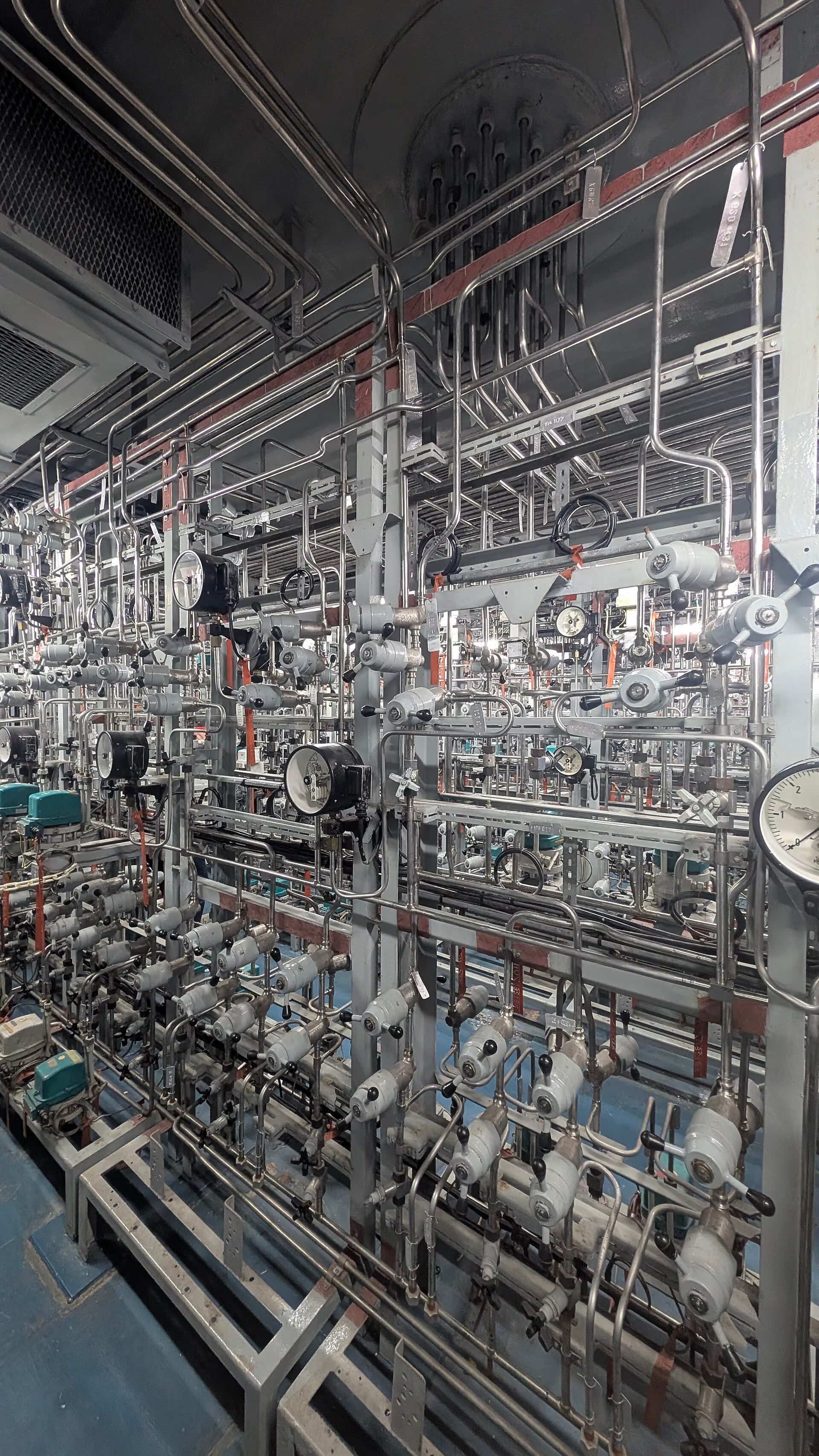
Why chemical processing needs stainless
The driver is corrosion, and the selector is the media. Chlorides and acids that carbon steel and cast iron tolerate in water service pit and attack them quickly in chemical service, which is why SS316 and SS316L are the default on chemical skids: the molybdenum in 316 improves resistance to chloride pitting over SS304, and the low carbon of 316L protects as-welded joints. Grade selection is a corrosion decision, not a strength decision — the same fitting body in SS304 fails early in a chloride line where SS316 runs for years. The grade logic is covered inSS304 vs SS316, and it applies line by line: state the media per line on the RFQ, because one skid usually mixes aggressive and benign service.
Typical duties on a chemical line
Chemical plants buy instrumentation fittings for the connections around the process, not the process pipe itself: dosing and chemical-injection skids, analyzer sample lines, process isolation and vent points, and the utility-to-process crossovers where air, nitrogen or water meets a chemical stream. Each is small-bore, each must not weep, and each is where a wrong grade shows up first — a weeping sample joint drags the analyzer readings with it. The anatomy of those joints is the subject of what instrumentation fittings are, and leak behavior on aggressive media is covered in compression fitting leaks: causes and fixes.
Duty to product family
| Duty | Recommended FerruleX family | Grade / note |
|---|---|---|
| Chemical injection and dosing lines | Compression fittings | SS316 / 316L; state the media and concentration |
| Analyzer sample lines | BA / precision tube + needle valves | SS316L tube; smooth bore for fast analyzer response |
| Process isolation and vent | Ball valves and needle valves | SS316 bodies for chloride service |
| Dosing pump outlet, one-way flow | Check valves | SS316; prevents back-flow into the metering pump |
| Pump and skid vibration connections | Corrugated hose assemblies | SS316 where the media is aggressive |
| Mixed NPT/G manifolds on imported skids | Adapters and weld fittings | SS316; identify the thread before ordering |
Standards context
The compression joints here follow ISO 8434-1 / DIN 2353 practice — the 24° cone system described in bite-type fittings explained — and the tubing follows ASTM A269/A270 conventions covered inbright annealed tubing. There is no hygienic standard on this duty: chemical lines are industrial, non-sanitary service, and we quote them that way honestly.
What to state on the RFQ for chemical duty
- Media and concentration per line — the corrosion driver, and the reason the grade is chosen.
- Chloride exposure where known — it decides 304 versus 316.
- Design pressure and temperature per line.
- Grade call-out (SS316 / SS316L) and any dual-certification requirement.
- Thread standard and tube OD × wall, so the bodies and ferrules are quoted for the real line.
Ready to order from the factory?