Passivation is the acid treatment that removes free iron and other contaminants from the surface of stainless steel so the chromium-rich passive film can form cleanly — it restores the surface’s own corrosion resistance rather than adding any coating. Every machined fitting arrives from the shop with embedded iron and shop contamination on its surface, and passivation is the step that turns freshly machined stainless back into corrosion-resistant stainless. Here is what the treatment does, which method fits which part, and the line it cannot cross.
Key takeaways
- Passivation removes free iron and shop contamination and lets the chromium oxide passive film form evenly — it is a cleaning-and-restoration step, not a coating and not a repair.
- Nitric acid immersion is the traditional method; citric acid is the lower-hazard alternative accepted under ASTM A967 — both need clean parts, controlled time and temperature, and thorough rinsing.
- Weld heat tint is not passivation territory: removing the chromium-depleted oxide layer from welds is pickling, a stronger acid treatment, often with paste for local work.
- Passivation will not remove pits, will not fix rust bloom from contamination sitting in service, and will not rescue a wrong-grade selection — those need rework, cleaning, or a different grade.
What passivation actually does
Stainless steel protects itself with a passive film of chromium oxide a few atoms thick, and that film forms spontaneously when a clean surface meets oxygen. Machining, cutting and handling smear free iron and shop grime across the surface — iron that rusts first, stains the part, and seeds pitting under the film. Passivation dissolves that free iron and contamination in an acid bath without attacking the bulk stainless, so when the part is rinsed and exposed to air, the passive film forms clean and continuous. The standards frame: ASTM A967 covers chemical passivation treatments for stainless steel parts, and ASTM A380 is the broader practice for cleaning, descaling and passivating parts and systems. A point both make that buyers miss: a visibly clean surface is the prerequisite — passivation is not degreasing, and acids do not remove oil or scale.
The methods compared
| Method | What it removes | Best for | Caution |
|---|---|---|---|
| Nitric acid immersion | Free iron and light contamination; oxidizing conditions promote the passive film | Production batches of machined fittings and valves | Oxidizing acid — fume control, PPE and waste handling; verify rinse neutrality |
| Citric acid immersion | Free iron via chelation; supports film formation | Same duty with lower hazard and easier disposal | Milder chemistry — validate time, temperature and concentration per A967 for the alloy |
| Pickling (immersion or paste) | Weld heat tint, oxide scale and the chromium-depleted layer beneath | Weldments, welded tube systems, locally heat-tinted zones | Stronger acid chemistry, typically nitric-hydrofluoric; over-pickling can pit — follow qualified procedures |
The pickling row is the one buyers confuse most often. Weld tint is a chromium-depleted oxide skin with reduced corrosion resistance; passivation alone does not remove it, which is why welded assemblies need pickling first and passivation after. The same distinction decides what to ask for after fabrication — passivated fittings for machined parts, pickled-and-passivated for welded ones. For the hygienic end of the market the documentation habit is the same as the sanitary duty described in sanitary stainless fittings, and the food-plant context for it sits on the food & beverage page.
Why stainless rusts after welding
Rust blooming near welds has three usual causes. First, the weld heat tint itself: a chromium-depleted oxide layer that rusts unless pickled off. Second, contamination: carbon-steel brushes, grinding dust, or steel wool dragged across the surface during fabrication leave embedded iron that rusts in damp service. Third, service environment: chlorides settling on a roughened weld zone concentrate until the film breaks down locally. The fix follows the cause — pickle the tint, clean the contamination, control the environment — and a final passivation after fabrication restores the film across the whole part. A machined fitting that arrives stained from the shop is a cleaning problem; a fitting that rusts in chloride service after installation is a design or grade problem, and the pitting side of that story is covered in pitting corrosion.
What passivation will not do
Passivation does not repair pits — metal already lost stays lost, and the honest options are qualified rework or replacement. It does not remove heat tint, scale or heavy oxides; that is pickling. It does not change the alloy: a 304 fitting passivated for chloride duty is still a 304 fitting, and the right answer is 316 or duplex, not a stronger acid. And it is not a license to skip handling discipline — passivated parts shipped in a container with carbon-steel swarf arrive contaminated again. For factory orders, name the requirement on the RFQ: passivation per ASTM A967 after machining, pickling after welding, and the documentation expected with the shipment.
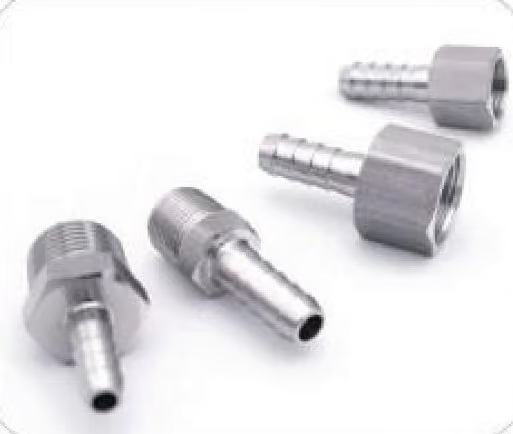
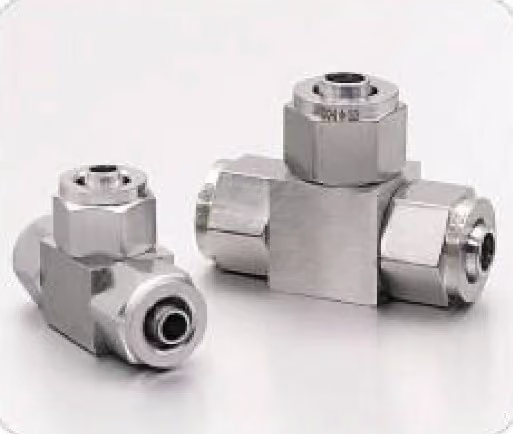
FerruleX supplies machined cast fittings and compression bodies in passivated condition, and will pickle-and-passivate welded assemblies to order — state the requirement on the RFQ with the standard and the documentation needed. Request a factory quote.
FAQ
Why does stainless steel rust after welding? Three usual causes: weld heat tint — a chromium-depleted oxide layer that rusts unless pickled off; embedded iron from carbon-steel tools, brushes or grinding dust used in fabrication; and chlorides concentrating on the roughened weld zone in service. Each cause has its own fix: pickling, cleaning, or environment and grade control.
How do you prevent stainless steel from rusting? On the material side: choose the grade for the chloride level — 316 where chlorides are real, duplex for severe service — and passivate after fabrication so the film forms clean. On the system side: keep chlorides and deposits off the surface, eliminate crevices, and do not let washdown chemistry dry on fittings. Passivation restores; it does not substitute for grade.
What is the difference between passivation and pickling? Passivation removes free iron and light contamination and promotes the passive film, traditionally with nitric or citric acid. Pickling is the stronger treatment — typically nitric-hydrofluoric — that removes weld tint, scale and the chromium-depleted layer beneath them. Welded assemblies usually need pickling first, then passivation.
Will passivation remove or stop pitting? No on both counts. It cannot replace metal already lost to pits, and it cannot make a pitted or crevice-ridden environment benign. Pits need qualified rework or replacement; the environment needs design or maintenance change so new pits cannot initiate.
What should I specify on the RFQ for passivated fittings? Name the standard (passivation per ASTM A967 after machining), the method if you have one (nitric or citric), and the treatment for any welded parts (pickle plus passivate). If certificates matter, ask for them with the order so the paperwork matches the process.