The right HS code for stainless steel fittings is a six-digit decision that follows your goods across every border: it sets the duty rate, drives customs clearance speed and anchors the paperwork trail. Importers who state it — or at least the heading — get cleaner quotes and faster clearances. Here is the verified reference for this product family.
Key takeaways
- Stainless tube and pipe fittings live in heading 7307: 7307.21 flanged, 7307.22 threaded elbows/bends/sleeves, 7307.23 butt-welding fittings, 7307.29 everything else stainless — cast bodies enter at 7307.11/7307.19.
- Valves live in heading 8481: 8481.30 check valves, 8481.20 pneumatic/hydraulic transmission valves, 8481.10 pressure-reducing, 8481.40 safety/relief — and ordinary ball, gate and needle valves land in the catch-all 8481.80.
- The 6-digit HS level is international, but duty rates and extra digits are national: your destination country extends codes to 8–10 digits with its own tariffs, and final classification is legally the importer’s responsibility.
Why the code matters
Three practical reasons. Duty rate: the code determines what you pay — different headings and subheadings carry different percentages, and misclassification means either overpayment or a retroactive bill with penalties. Clearance speed: a correct, consistently used code on the invoice and packing list lets customs process the declaration routinely; an ambiguous or missing one routes the shipment to inspection. Paperwork coherence: certificates of origin, preference claims under trade agreements and the factory’s export declaration all key off the same code — when the invoice, the packing list and the certificate disagree, clearance stops. Material certificates ride the same paperwork wave: the EN 10204 3.1 guide covers the certificate types and how to name them on the RFQ. Stating your destination country and expected code context on the RFQ lets the factory align its documents with your import declaration from the start.
HS code reference
| Product family | HS heading / code | Notes for importers |
|---|---|---|
| Stainless flanges | 7307.21 | Flanged fittings of stainless steel; verify forged-vs-other splits at national level |
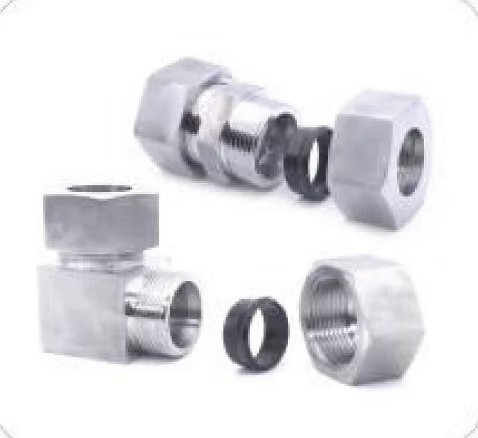
| Stainless threaded elbows, bends, sleeves | 7307.22 | Threaded compression bodies and adapters typically land here |
| Stainless butt-welding fittings | 7307.23 | Weld-end fittings and weld unions |
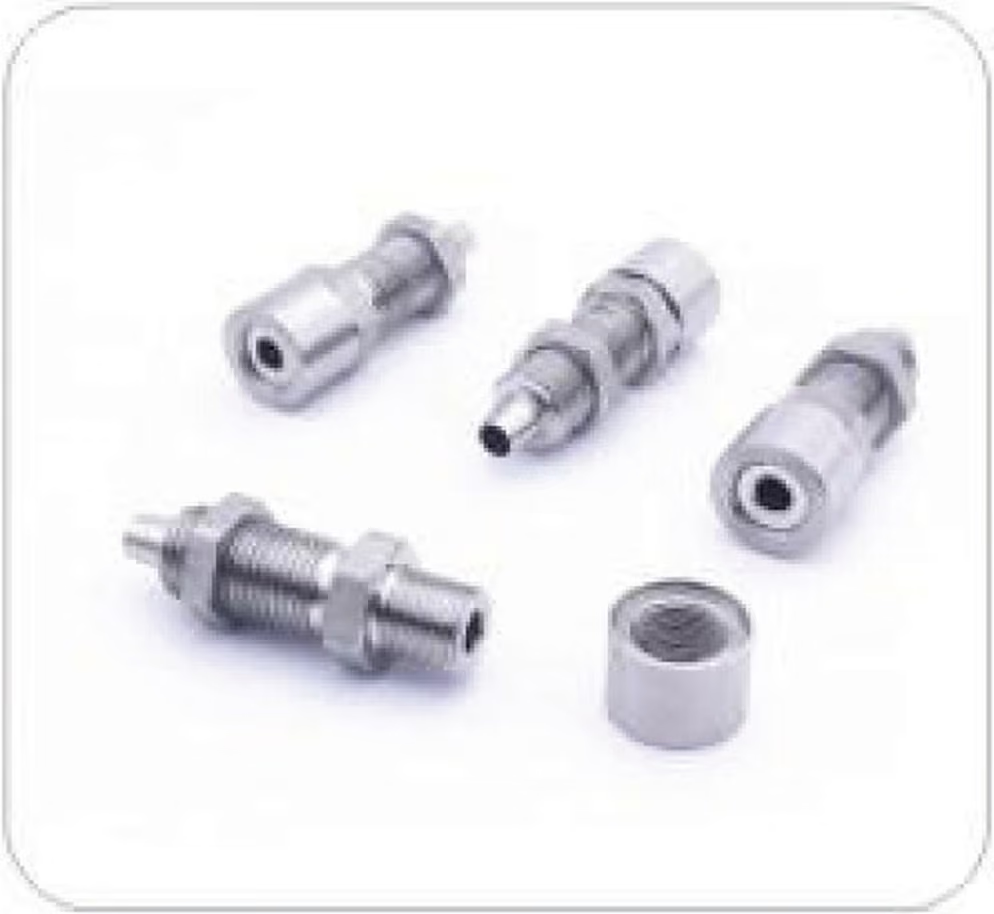
| Other stainless fittings (unions, tees, nipples, compression bodies n.e.s.) | 7307.29 | The residual stainless line — most catalog fittings settle here |
| Cast fittings of iron/steel | 7307.11 / 7307.19 | Investment-cast bodies enter under the cast-fittings lines |
| Check (non-return) valves | 8481.30 | Spring, swing and dual-plate checks |
| Valves for pneumatic/hydraulic transmission | 8481.20 | Directional and flow-control valve stations |
| Pressure-reducing valves | 8481.10 | Regulators |
| Safety or relief valves | 8481.40 | Overpressure protection |
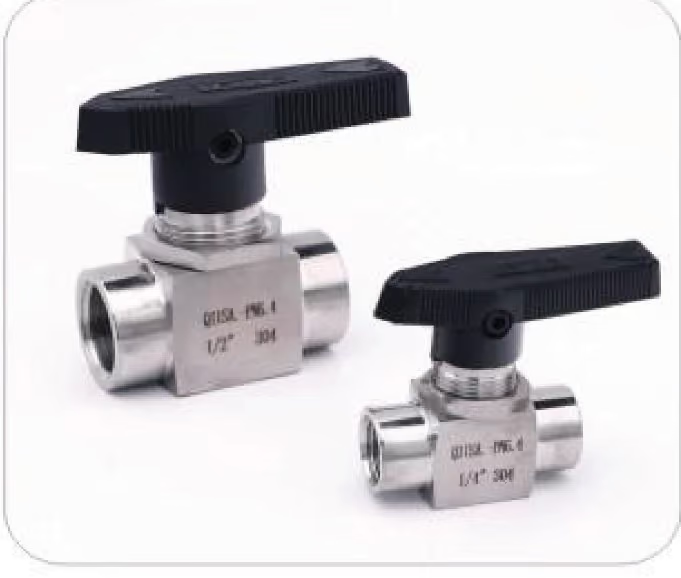
| Other valves — ball, gate, globe, needle | 8481.80 | The catch-all: most manual ball and needle valves classify here |
| Valve parts | 8481.90 | Repair kits and loose internals |
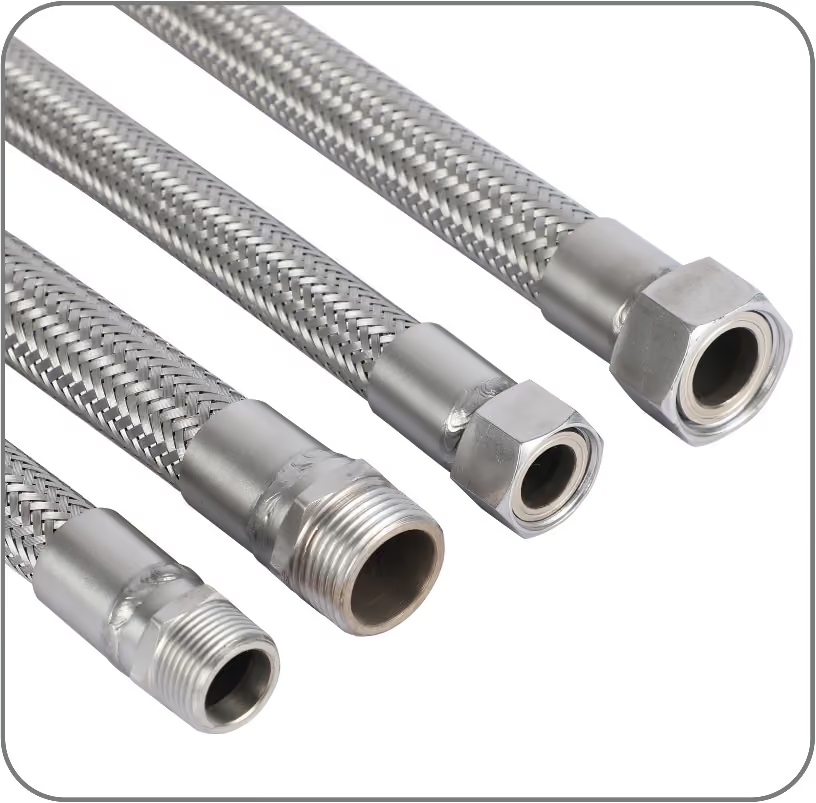
| Corrugated flexible hose assemblies | Heading 8307 territory | Flexible tubing of base metal, with or without fittings; exact classification depends on construction and end fittings — confirm with your broker |
Reading the table like an importer
Notice how the families split: fittings of stainless follow 7307.2x by connection type, which is why the same elbow carries a different last digit as threaded versus butt-welding; valves follow 8481 by function, which is why a check valve and a ball valve of identical body material sit in different subheadings. Cast bodies are a separate question from stainless wrought bodies — the cast-fittings lines 7307.11/19 exist precisely because foundry products are classified apart from machined barstock. And the hose row is deliberately cautious: flexible assemblies are classified by construction and end configuration, so the heading is given and the six-digit decision belongs to your broker.
The cautions that save money
First, the 6-digit HS is harmonized internationally, but your destination country’s tariff extends it — 7307.21 in the US schedule carries national subdivisions (7307.21.10 versus .50 by forging state, for example) with different duty rates. Always check the destination tariff, not just the HS nomenclature. Second, classification is the importer’s legal responsibility, not the factory’s or the forwarder’s — a factory can advise from export experience, but the import declaration is yours. Third, keep the code consistent across invoice, packing list and certificate of origin; mixed codes for identical goods are an audit invitation. And if your destination offers preference programs or trade-agreement rates, the code is what the preference keys off.
FerruleX’s export invoices state the agreed codes per line, with packing lists and certificates aligned to them — see the products hub for the catalog families and the downloads page for documentation samples. Send your destination country and expected code context with the RFQ and we quote with paperwork that matches your import side. Request a factory quote.
FAQ
What HS code do stainless steel compression fittings use? Heading 7307, most commonly 7307.29 (other stainless fittings); threaded bodies often classify at 7307.22. The exact six digits depend on the connection type, and your destination extends the code further with its own duty rates.
What is the HS code for stainless ball valves? Heading 8481, catch-all 8481.80 for ordinary manual ball valves. Check valves take 8481.30, safety and relief valves 8481.40, and valve parts 8481.90.
Do HS codes differ by country? The 6-digit HS level is international. Beyond six digits, each country extends the code in its own tariff schedule — the US HTS and the EU CN add subdivisions with potentially different duty rates, so verify the destination tariff, not just the HS heading.
Who is responsible for correct classification? The importer of record, legally. Factories and forwarders advise from experience, but the import declaration — and any duty consequences — belong to the buyer.
Why should the code go on the RFQ? So the factory’s invoice, packing list and certificates match your import declaration from the start. Consistent codes mean routine clearance; mixed or missing codes mean inspection, delay and possibly re-assessed duty.